

15 Jan The Modern Localization Workflow (How It’s Actually Done Today)
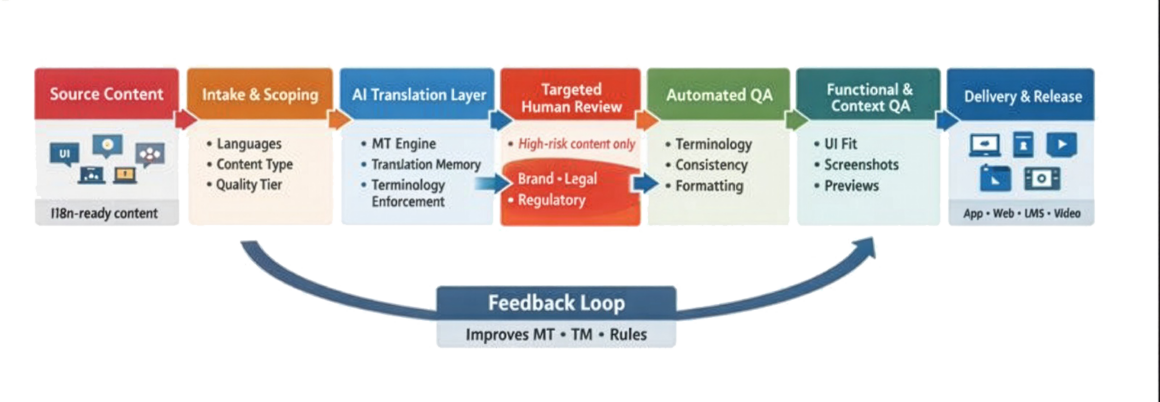
Localization in 2026 isn’t a linear “translate → review → deliver” process anymore. It’s a continuous, tool-driven workflow that blends humans, AI, automation, and metrics from day one. If you’re still treating localization as a late-stage task, you’re already behind.
This post breaks down how a modern localization workflow really works today, from intake to delivery, using current best practices across LSPs, vendors, and enterprise teams.
1. Content Is Prepared Before Translation Starts
Modern localization starts upstream. Before a single word is translated, teams focus on:
- Internationalization (i18n): Unicode support, locale-aware formatting, expandable UI, no hard-coded strings.
- Content structure: Clear segmentation, reusable components, minimal embedded formatting.
- Source quality: Clean, concise, unambiguous source text reduces cost and QA effort downstream.
Good localization teams don’t fix problems later. They prevent them early.
2. Centralized Intake via a TMS (or Equivalent)
Everything flows through a central system:
- Translation Management System (TMS)
- Git-based localization platform
- Custom pipeline tied to CI/CD
Key inputs captured at intake:
- Languages & locales
- Content type (UI, docs, marketing, video, eLearning)
- Turnaround expectations
- Quality tier (AI-only, AI + human, full human)
This step is critical because automation decisions happen here, not later.
3. AI Is the Default, Not the Exception
AI is no longer optional. Most workflows today use:
- Neural Machine Translation (NMT) as the baseline
- Translation Memory (TM) leverage to reduce cost
- Terminology enforcement during translation
- AI-based pre-QA to catch issues early
The key shift: AI doesn’t replace humans — it changes where humans add value.
Humans now focus on:
- High-risk content
- Brand tone
- Regulatory accuracy
- Cultural nuance
4. Human Review Is Targeted, Not Universal
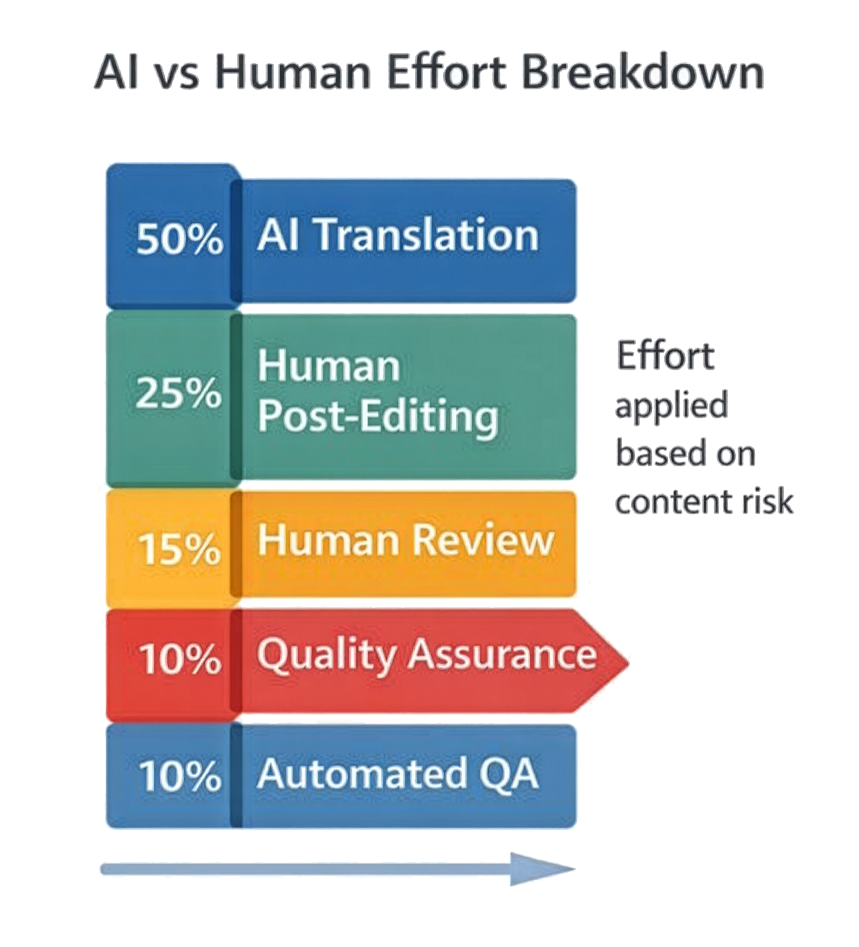
Modern localization workflows avoid blanket “human review everything” approaches. Instead, review is applied based on:
- Content sensitivity
- Visibility
- AI confidence scores
- Past quality data
This keeps costs under control while maintaining quality where it actually matters.
5. QA Is Multi-Layered (and Partly Automated)
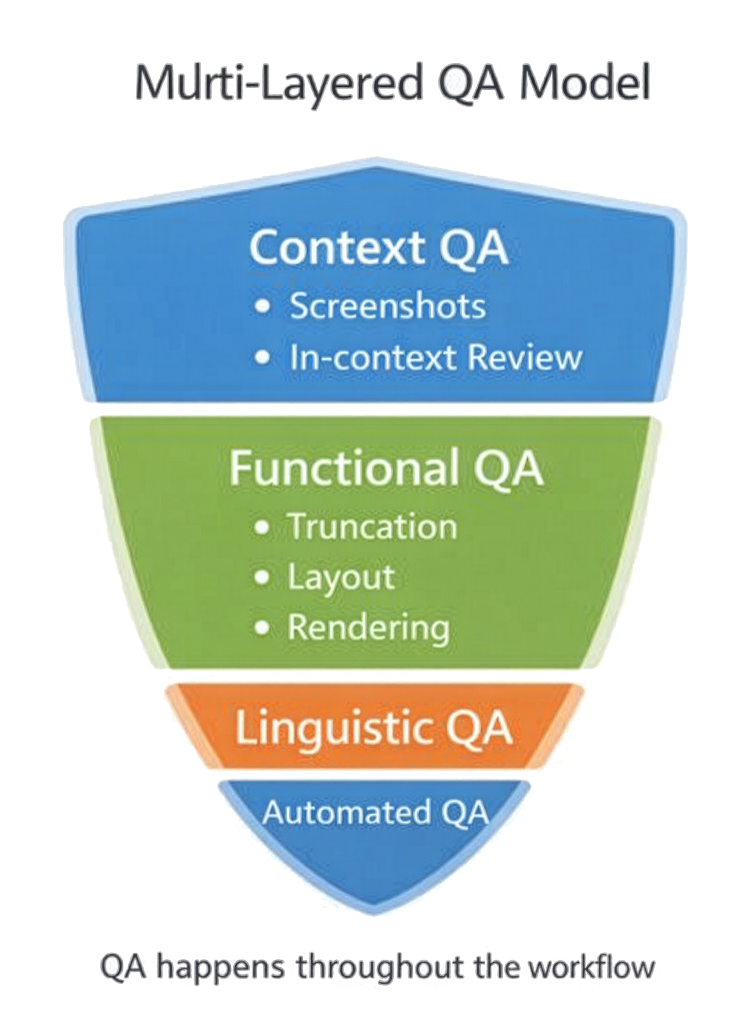
Quality assurance today happens in layers:
- Automated QA: terminology, consistency, formatting, missing tags
- Linguistic QA: targeted human checks
- Functional QA: UI fit, truncation, layout issues
- Context QA: screenshots, staging environments, preview builds
The goal is early detection, not last-minute firefighting.
6. Metrics Drive Decisions
Modern teams rely on throughput and productivity metrics, not gut feeling. Common metrics include:
- Words per hour (by content type)
- Runtime-based calculations for audio/video
- QA effort per word or per minute
- Automation coverage (% AI vs human)
When estimating effort or capacity, tools like l10n-estimator.com provide realistic benchmarks that align with how work is actually delivered today. Metrics aren’t promises. They’re planning tools.
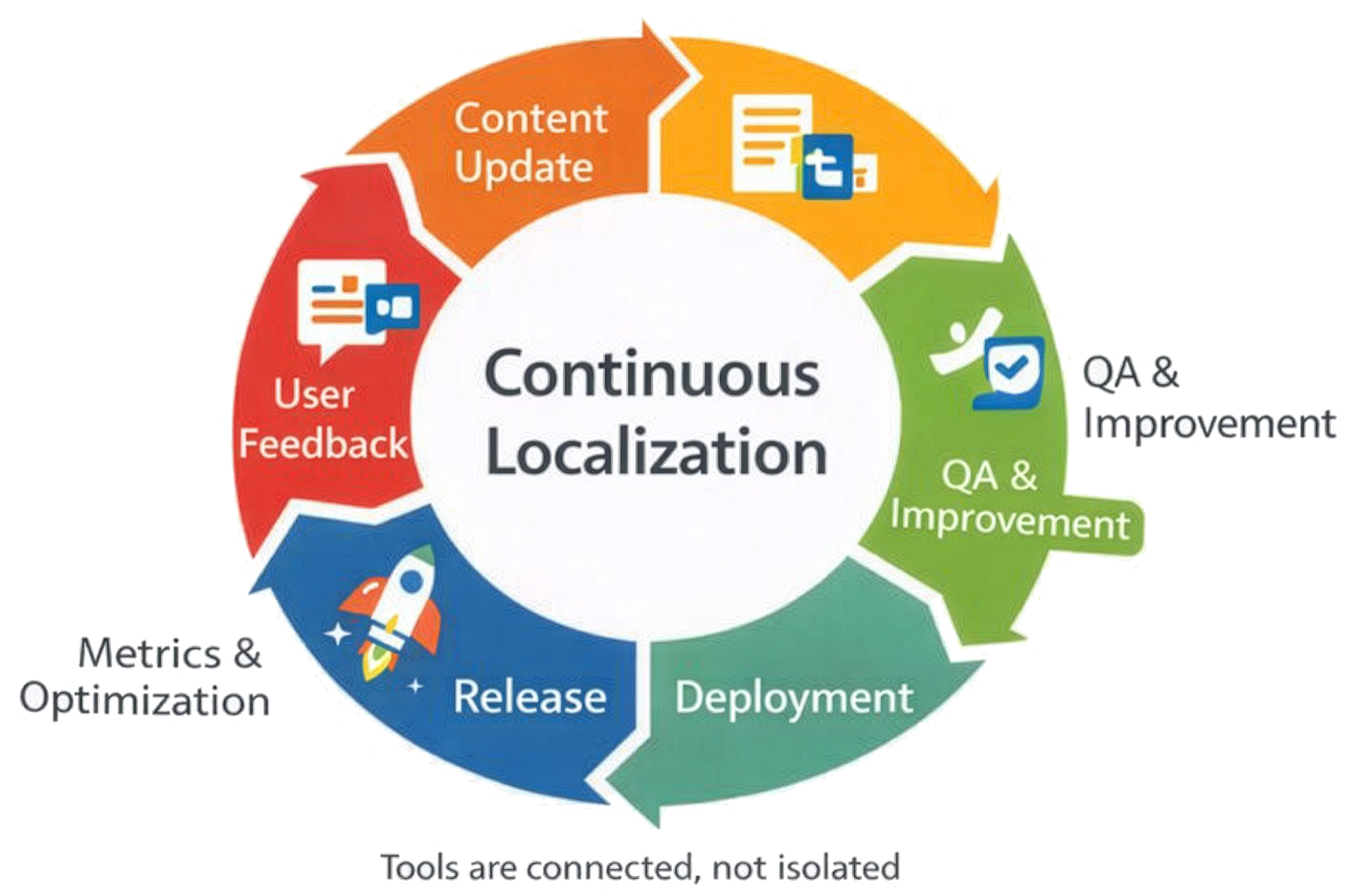
7. Delivery Is Continuous
Localization doesn’t “end.” Today’s workflows support:
- Continuous releases
- Incremental updates
- Rolling language additions
- Post-release fixes without restarting the whole cycle
This is especially critical for:
- SaaS platforms
- Mobile apps
- Help centers
- Multimedia content
If your localization workflow can’t keep up with product releases, it’s broken.
8. Feedback Loops Matter
Modern localization teams actively collect:
- Linguist feedback
- Vendor insights
- Client comments
- QA trends
That data feeds back into:
- Better MT engines
- Improved glossaries
- Smarter routing rules
- More accurate estimates
Localization improves over time — if you let it.
Final Thoughts
A modern localization workflow is:
- Automated where possible
- Human where it counts
- Measured, not guessed
- Continuous, not linear
If your process still looks like a spreadsheet and a shared inbox, it’s time to rethink it.
For readers who want a deeper foundational perspective, A Practical Guide to Localization by Bert Esselink is still a useful reference.
No Comments